FEATURED WORK
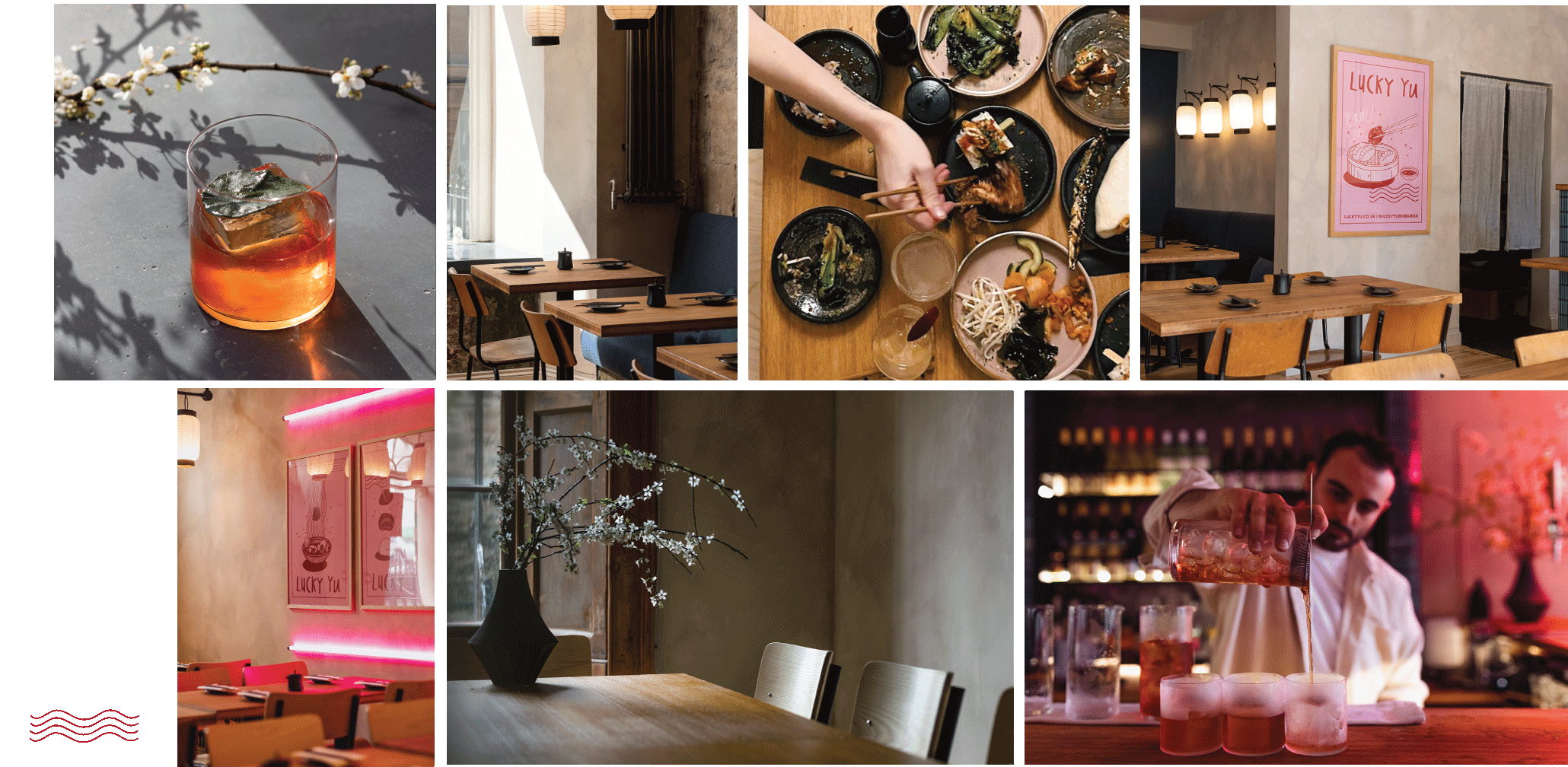
Lucky Yu is a contemporary Asian restaurant in Edinburgh, Scotland, created as a warm, energetic, and slightly irreverent neighbourhood restaurant. The concept combines the quieter textures and restraint of a “wabi-sabi” interior with the colour, glow, and social energy of neon Tokyo nightlife to create a space that shifts naturally from relaxed daytime dining into a darker, more socially alive evening atmosphere, shaped by music, pink neon light, playful small plates, and inventive cocktails shared late into the evening.
Natural materials, limewashed walls, soft lighting, and open-weave linen curtains create a textured and understated backdrop during the day, while in the evening the restaurant shifts character entirely. Pink LED light projected from the window frames washes out into the dark street, drawing people toward the glow of the bar, neon signage, music, and late-night atmosphere inside.
Counter seating wraps around the bar and into the front windows, helping blur the boundary between the restaurant and the street and creating a more social and animated dining experience.
Developed alongside the interior, Lucky Yu’s visual identity brought a more overtly playful and irreverent layer to the restaurant. Across menus, posters, signage, merchandise and marketing, bold graphics and illustration sit in deliberate tension with the quieter material language of the space — the two balancing each other to give the restaurant its sense of humour and character.
Lucky Yu was recently recognised in the Michelin Guide for Great Britain & Ireland.
instagram.com/luckyyuedinburgh
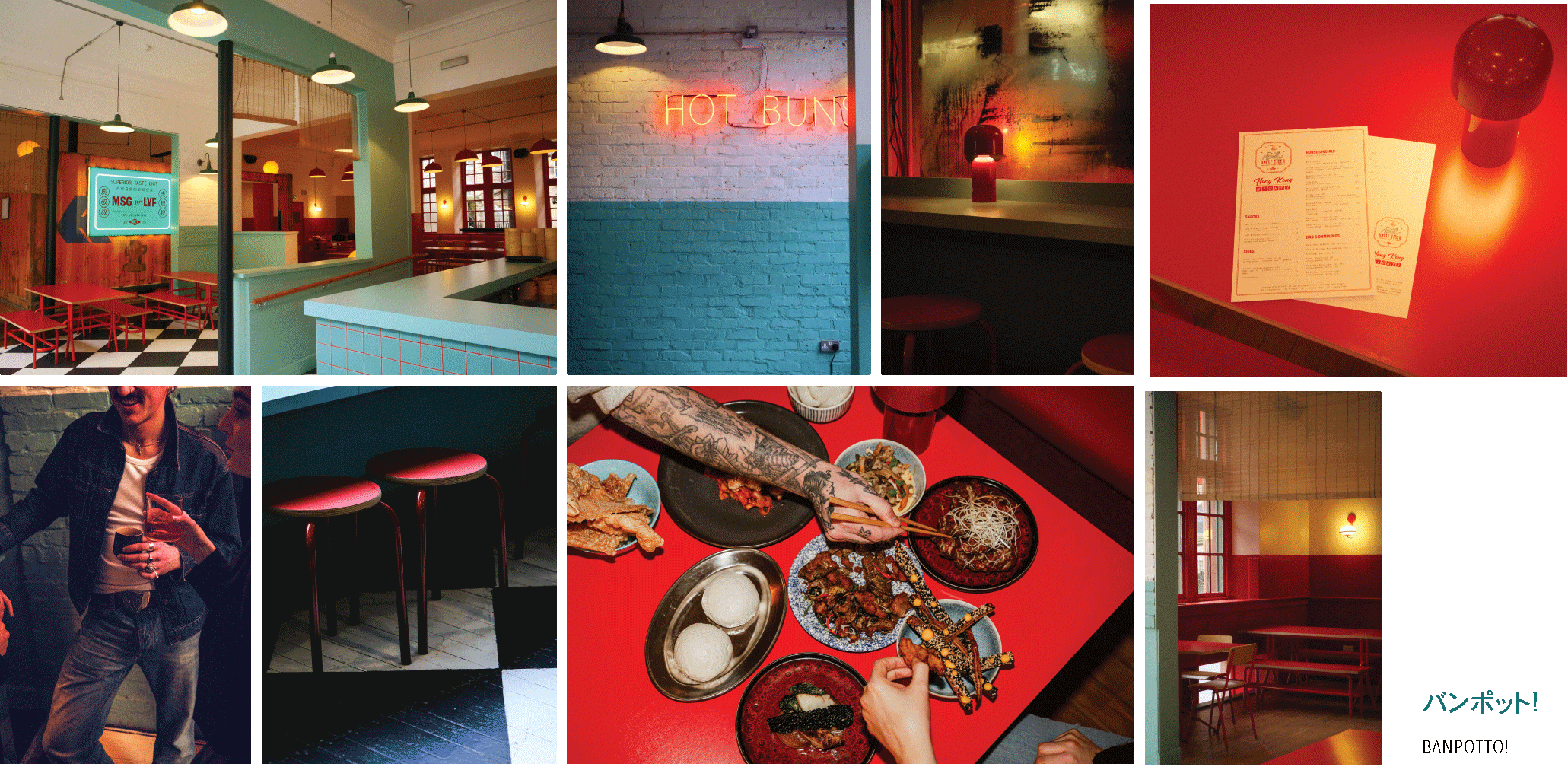
Uncle Tiger is an Asian eating and drinking venue in Edinburgh’s Old Town, created around a deliberately flexible concept that could shift between different regional food cultures without losing its identity. The creative direction encompassed not only the physical venue, but the development of the concepts themselves — building distinct identities, narratives and experiences that could evolve within the larger Uncle Tiger world. Rather than tying the venue to a single cuisine or place, the idea was to build a distinctive world capable of evolving over time.
The interior transformed a large, deteriorated hospitality space through a bold palette of mint green and red, checkerboard flooring, bamboo blinds, glowing globe lights and deliberately simple furniture. References to canteens, kopitiams, depachika and Asian street-food culture were filtered through a contemporary, slightly retro lens, creating something playful and recognisable without becoming a literal recreation of any one place.
That idea extended across the whole experience, from the spatial layout and interior detailing to signage, menus, visual identity, lighting and styling. The existing building imposed significant practical constraints, so the design also had to work around the realities of a large historic site while retaining the clarity and character of the concept.
instagram.com/_uncletiger
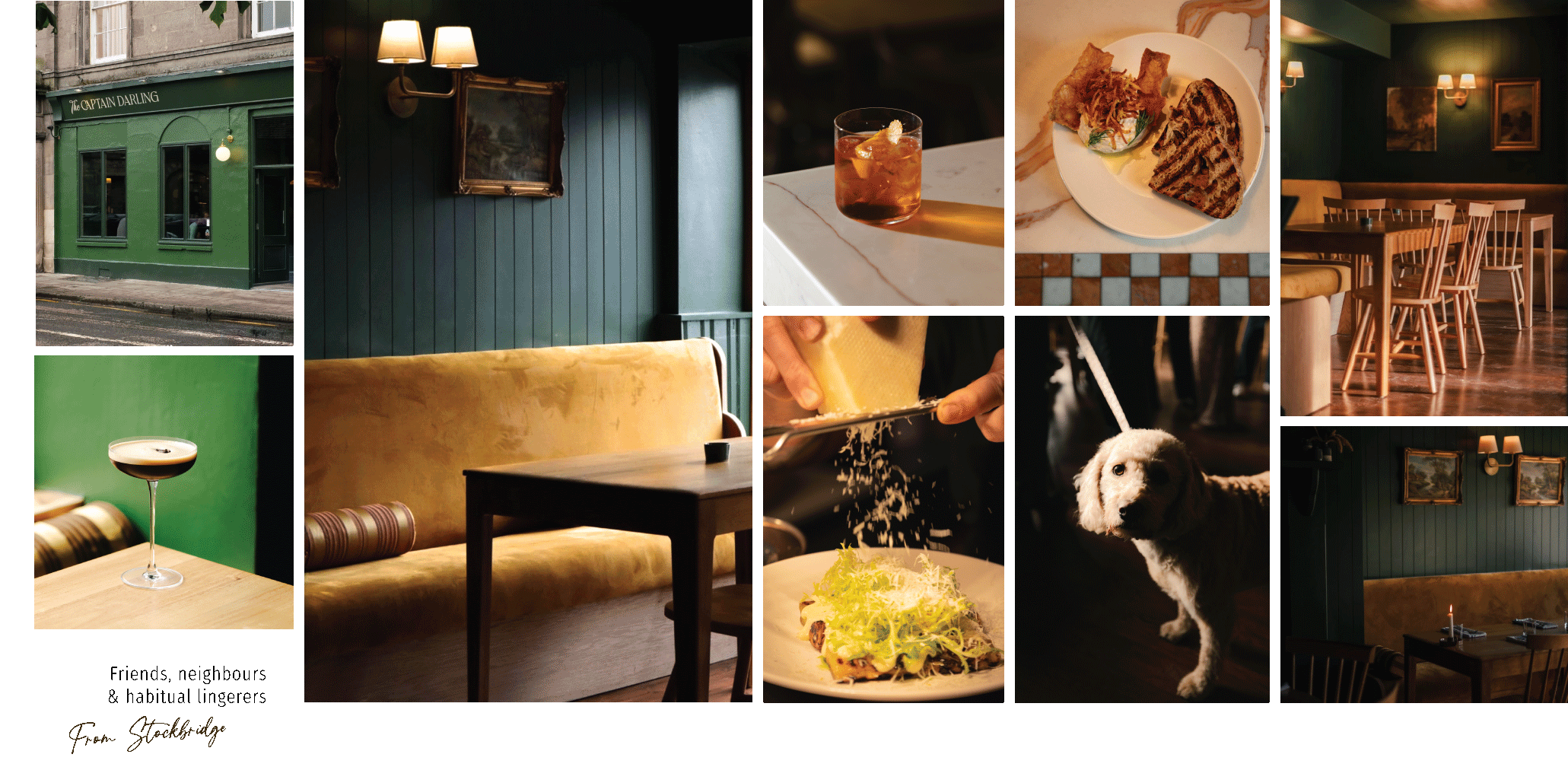
The Captain Darling is a neighbourhood pub and brasserie in Stockbridge, Edinburgh, built around a reinvention of familiarity. It draws on the warmth and ease of a proper local — good food, good drinks and somewhere you genuinely want to spend time — without relying on nostalgia. Richly layered colour and materiality give the space much of its character, with deep green painted panelling, warm upholstery and lighting, a timber bar and a flourish of red and cream marble checkerboard at its foot bringing richness to an otherwise restrained architectural language. Glazed dividers break the interior into distinct but connected dining spaces, creating intimacy and definition while allowing light and views to filter between them.
That same balance runs through the wider experience. The Captain has a distinct voice — warm, wry and entirely sincere — while the food is deliberately simple and proper, but excellently executed and served without unnecessary ceremony. Together, the interior, identity and offer create something recognisable but particular: familiar enough to feel immediately comfortable, but with a character entirely its own. The Captain Darling feels as though it has always been part of the village.
instagram.com/thecaptaindarling